Portraits of Extraordinary Trees, Illuminated.
The exhibition, Portraits of Extraordinary Trees, Illuminated, 2020, resulted after many nights spent in the Royal Botanic Garden, Sydney capturing on film illuminations of ‘the Significant Trees of the Royal Botanic Garden, Sydney’. This exhibition brings together for the first time images of ‘remarkable’ or ‘significant’ trees that reside in famous parks in Paris and Versailles and those from the historic, Royal Botanic Gardens in Sydney.
As exhibited at Portraits of Extraordinary Trees, Illuminated, 2020, Royal Botanic Garden, Sydney (Calyx)) with the Remarkable Trees of Paris and Versailles.

This close relative of the Wollemi Pine is native to the subtropical rainforests in the mountains of South East and Northern Queensland. The Bunya Pine can grow up to 35-45 metres in height and live for 600 years. The cones can be 20-35 cm in diameter and weigh up to 10 kg. Bunya Pines are an important source of food, kindling, timber and fibre for Aboriginal cultural groups. The large seeds can be eaten raw, roasted or ground to make bread. The planting date for this tree is not known but it dates from after 1903.

This is one of the two palms that were transported in tubs in 1840 from Reunion Island in the Indian Ocean. They were planted in their current location in December of that year, at what was then the entrance to the Royal Botanic Garden Sydney. Chinese Fan Palms are native to Japan, Taiwan and southern China but were introduced to Reunion Island in the eighteenth century and are now naturalized.

This is one of a number of specimens of this widespread gum tree growing in this garden that predate the arrival of Europeans in Australia. This tree is a remnant of the original woodlands that covered this part of Sydney and has stood witness to the modern transformation of Australia. Forest Red Gum is a variable species that can grow to 50 metres tall, with the largest latitude distribution of any Eucalypt species, as it grows from south-eastern Victoria to southern Papua New Guinea

Planted in 1853, this magnificent tree is probably the tallest tree in the garden.
It was grown from seed collected by early Garden’s director, John Carne Bidwill in 1849, near Maryborough in Queensland. Although over 160 years old this tree is only just approaching middle age, as the species is known to live for more than 500 years. Trees produce male and female cones on the same tree and the ground is often littered with small, slender male cones or larger rounded female cones that resemble balls of string. The genus name, Agathis, is derived from the ancient Greek word meaning ‘ball of thread’.
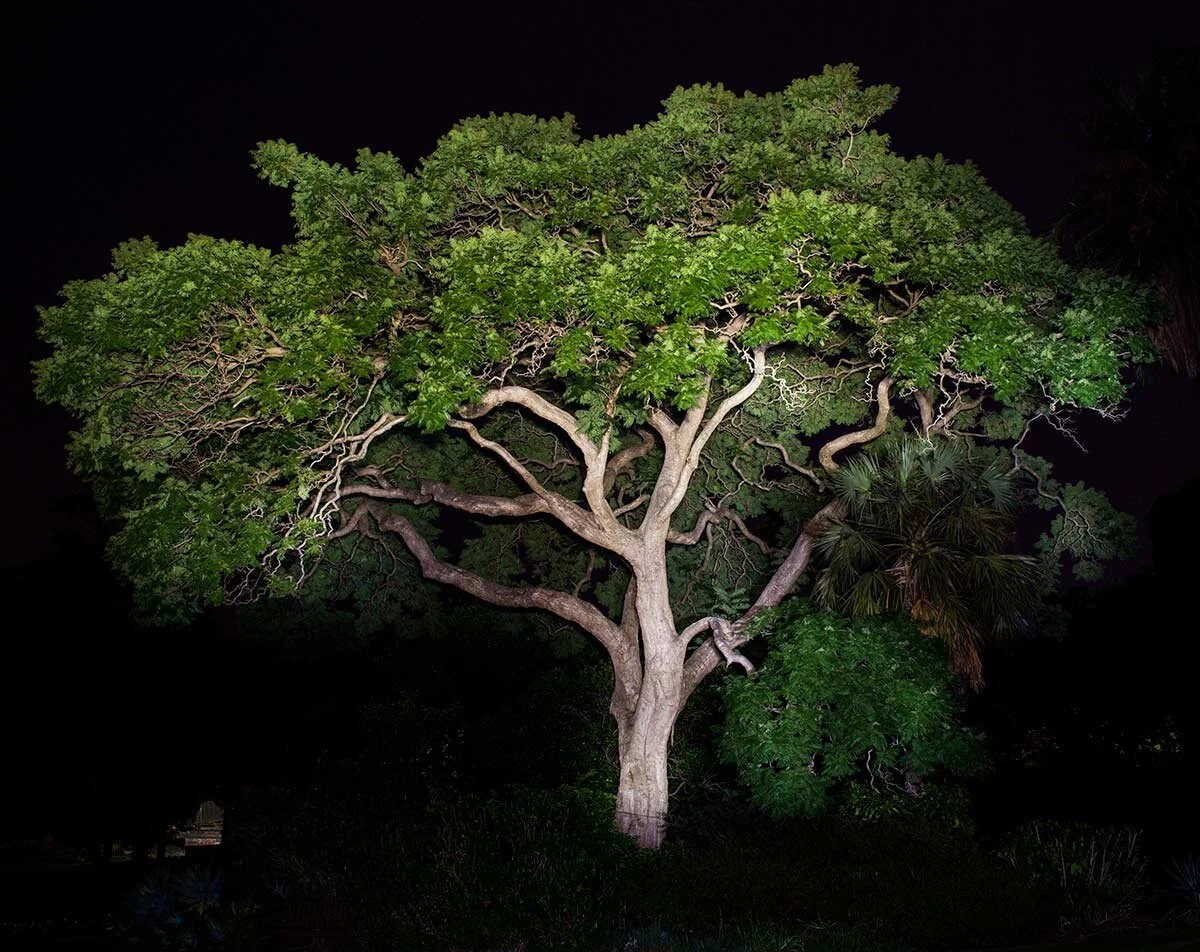
In 1868, the Sydney Morning Herald wrote with great excitement of the flowering of a Jacaranda in the Royal Botanic Garden. They were probably referring to this tree, likely to have come into our collection in 1857, not long after Jacarandas were first introduced to Australia by nurseryman Thomas Shephard in 1851. Native to Southern Bolivia and North Western Argentina, they were widely planted in Sydney’s suburbs from the late nineteenth century and grace Sydney with their magnificent purple blooms in late October and early November each year.

There is good evidence to suggest that this tree first germinated from seed sent to Sydney by Ludwig Leichardt from Port Essington in 1846. He was the first European to encounter these trees, native to the arid and monsoonal tropics of Northern Australia. Showing the scars and girth of old age this tree, like its wild relatives stores large amounts of water in its internal timber. They were used as a source of emergency water by Aboriginal people and later European explorers.
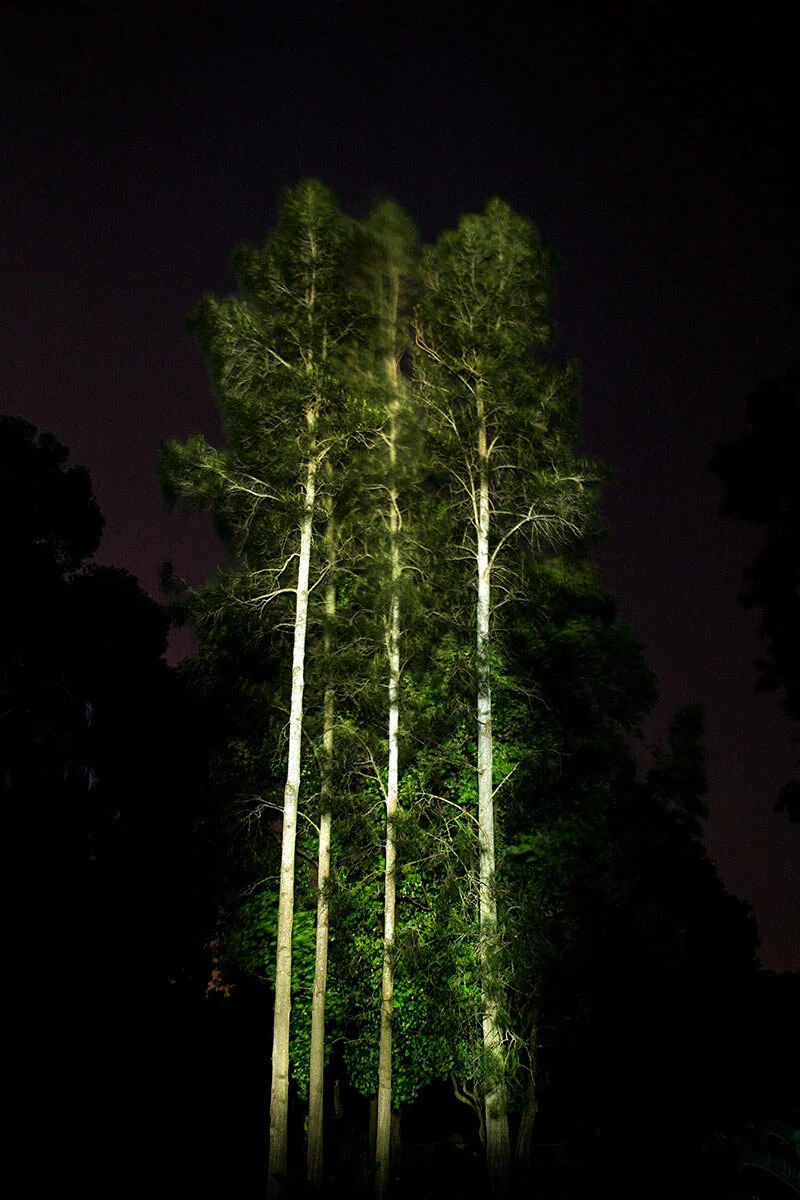
This clump of trees is a remnant of the Casuarina forest that grew at the highwater mark of Woggan-ma-gule (Farm Cove) in 1788, when Europeans arrived in Australia and began clearing land to establish a farm on what is now the Royal Botanic Garden Sydney. A widely distributed species that can form pure stands and create the Swamp Oak Floodplain Forest ecosystem, becoming increasingly rare in NSW due to land clearing for human activities.

A tree of myth and legend associated with ancient writers and mariners who brought tales to Europe of the magical qualities of the blood-like resin of ancient gargantuan plants. Native to the Canary Islands, the resin of these trees has been traded since the fifteenth century and amongst other uses it was used for polishing violins. This tree was probably planted in the 1880s and developed a perfect symmetrical shape, until on the 2nd May 2008 it fell over. It has continued to grow, flower and fruit. This image actually shows the view of the underside of the tree, which is now lying on its side.

Planted in February 1998, this is the first specimen of this rare species planted in the world. The species was discovered by David Noble, a national park ranger, canyoning in the wilderness of the Wollemi National Park in 1994. The discovery was a botanical sensation, a representative of an evolutionary line thought to be long extinct, found growing only 150 km from Sydney. At the time it was described as like finding a dinosaur living 1.5 hours from a city of four million people. There are approximately 100 adult trees growing in the wild. The Botanic Gardens and Centennial Parklands Trust is working hard to conserve this unique and rare species, leading projects involving DNA sequencing, translocating seedlings and finding ways to protect the trees from soil-borne pathogens. Find out more at https://www.rbgsyd.nsw.gov.au/science.